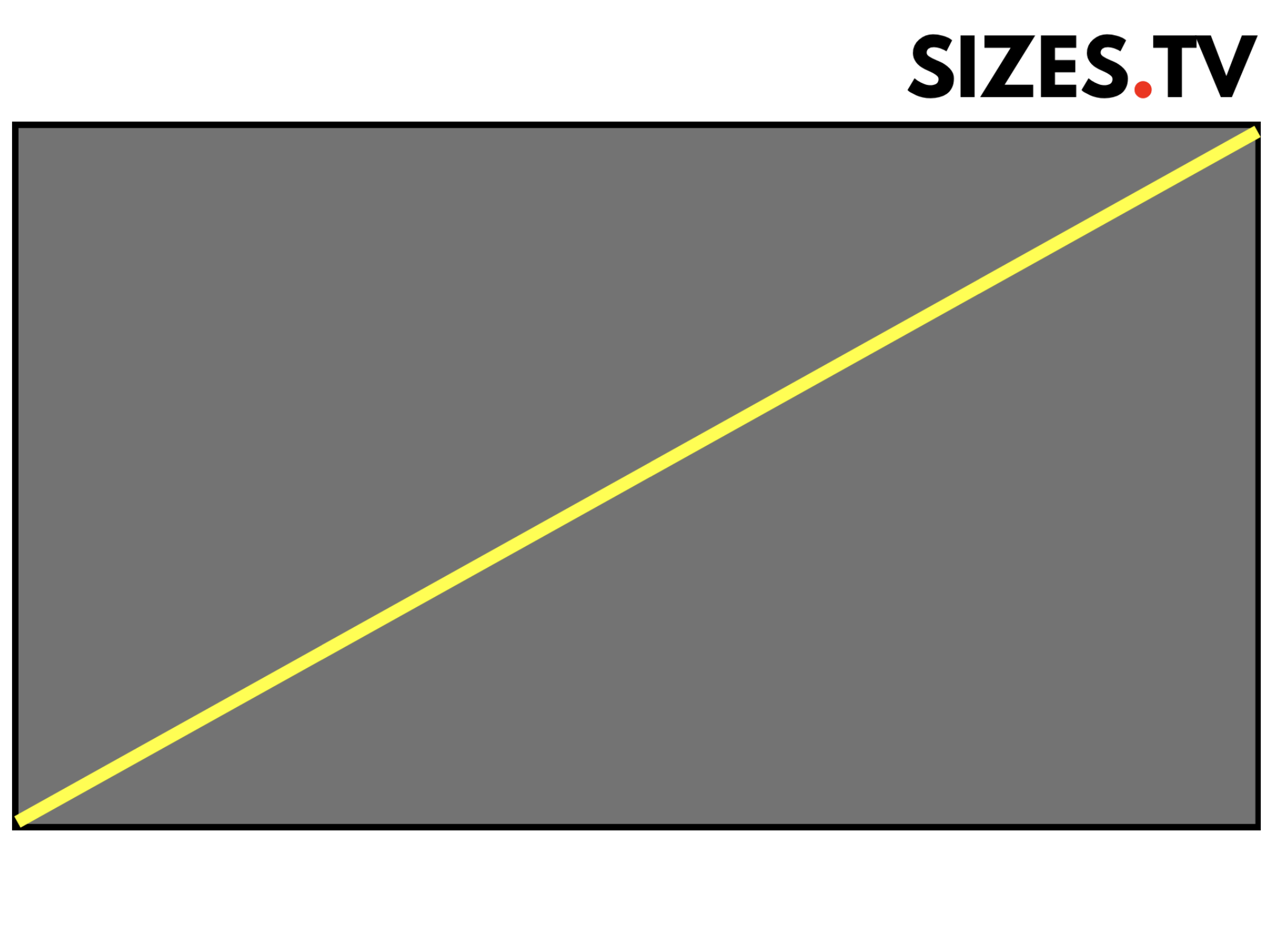
Television Screen Sizes Are Measured Diagonally
Television screen size is measured diagonally inside the bezel from the bottom left corner across the screen’s viewable surface to the top right corner of the screen or from the top left corner to the bottom right corner. TV sizes are categorized into classes after being rounded up or down in their diagonal screen size measurement to the nearest whole inch.
Since we are on the same page regarding how to measure TV screen size, I will discuss why it is so important when shopping for a new TV.
The ideal TV viewing distance is determined by the size and resolution of the television screen, and also the types of content you plan on consuming. Streaming or gaming in 4K, or watching a 4K Blu-ray Disc allows you to sit much closer to the screen without seeing individual pixels, compared to watching older movies and TV shows or watching regular DVD movies, which require that you sit further away to avoid seeing the individual pixels. It’s more comfortable and relaxing to enjoy a more immersive TV viewing experience when the content is ultra high definition.
Three of the most common questions after knowing how to measure TV size that arise when shopping for a new television are “What size TV do I need?”, “What size TV should I get?”, and “What size TV for my room?”

see more 16 inch class televisions
A general rule of thumb is that you can take your proposed viewing distance in feet and multiply it by 10 to calculate the largest TV screen size in inches that you should probably consider. In other words, if you will be seated approximately 8.5 feet away from the TV screen, you probably should not go much larger than an 85 inch television.
The other major factor is that the larger the TV size you select, the heavier and bulkier it becomes for delivery drivers and also consumers to lift, unbox, move, and/or mount the larger television onto a TV stand or permanently to the wall. Wall mount brackets and TV stands are sold separately, unless noted otherwise.
………
Two minimum requirements to be featured on this Sizes.TV website are that any specific television under consideration must have both a built-in ATSC TV tuner to receive free terrestrial over-the-air digital television channels, and also have at least one HDMI input. HDMI input does not have to be ARC or eARC, as this is not yet a common feature on the very smallest size televisions.
………
You will probably want to consider connecting your new television to an optional all-in-one sound bar, soundbar and subwoofer, soundbar surround sound system with two rear speakers and a sub, or even a component-based home theater audio system.
………
………
email@Sizes.TV
………